Executive Summary↑
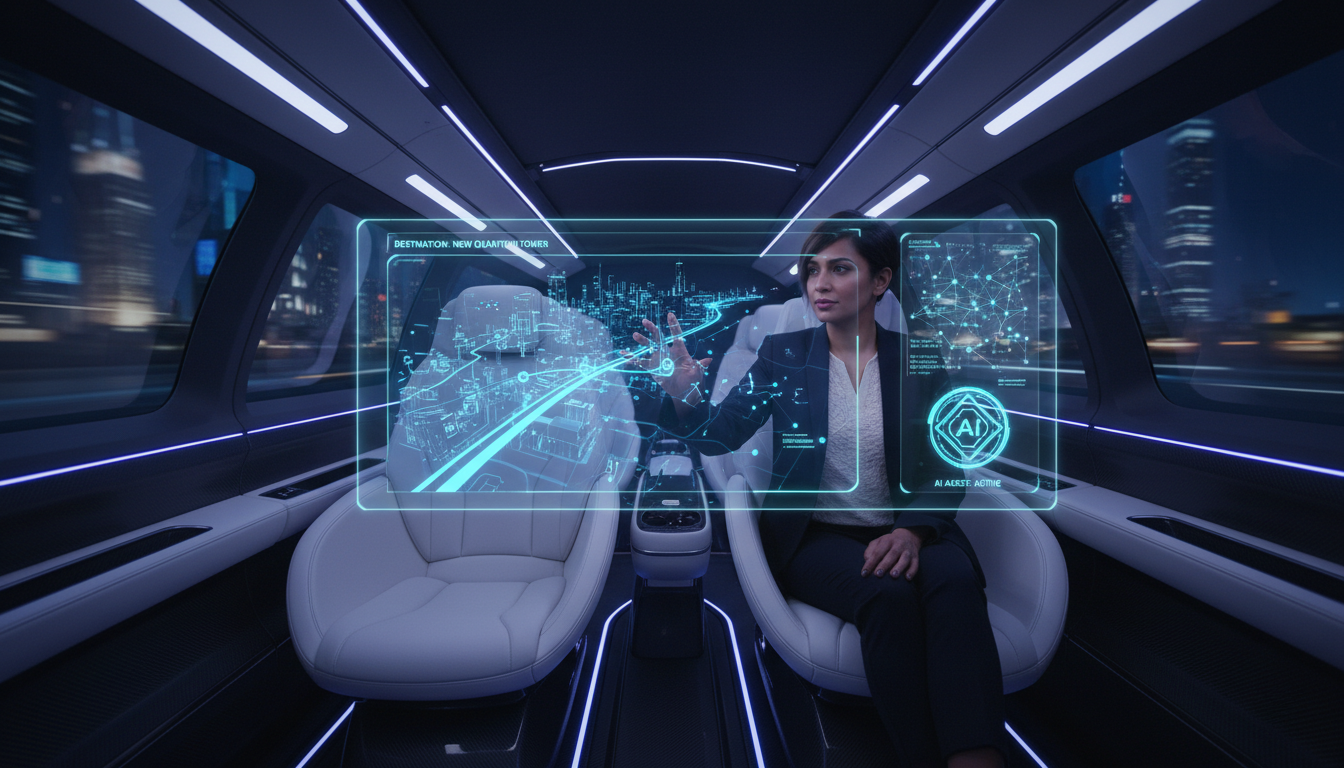
The shift from passive chat interfaces to active agents is accelerating. Waymo’s decision to test Gemini within its robotaxis marks a critical step in Google’s hardware-software convergence. It turns the vehicle into a proactive assistant capable of reasoning through complex passenger needs. This move signals that autonomous systems are moving toward a more intuitive, agent-driven model where the AI doesn't just drive, but interacts.
Specialized applications in high-stakes environments like the operating room are becoming the new proving grounds for margin growth. Companies like Akara are demonstrating that the value in AI isn't just about code generation. The real upside lies in physical safety and efficiency in regulated spaces. Success here depends on the evolution of vision-language models that can reason in four dimensions. Expect these verticalized AI plays to attract more capital as general-purpose models begin to commoditize.
Continue Reading:
- The Age of the All-Access AI Agent Is Here — wired.com
- Learning to Reason in 4D: Dynamic Spatial Understanding for Vision Lan... — arXiv
- Waymo is testing Gemini as an in-car AI assistant in its robotaxis — techcrunch.com
- Four bright spots in climate news in 2025 — technologyreview.com
- Why the operating room is ripe for AI, according to Akara — techcrunch.com
Product Launches↑
The industry is pivoting from chatbots that talk to agents that act. This transition, led by OpenAI’s rumored Operator project and Anthropic’s Computer Use feature, marks a shift toward software that controls your desktop directly. These tools move beyond simple text generation to execute mouse clicks and navigate complex software. It's a play for a future where the AI doesn't just suggest a flight but actually buys the ticket.
For investors, the real story is the battle for the "execution layer" of the internet. If these agents successfully bypass traditional search interfaces, current $100B+ ad-revenue models face a serious threat. Success depends on whether users trust a model to handle their credit card details without human supervision. Reliability metrics will soon matter far more to the bottom line than raw model size.
Continue Reading:
- The Age of the All-Access AI Agent Is Here — wired.com
Research & Development↑
Vision Language Models have a depth perception problem that keeps them trapped in two dimensions. They can identify a car in a photo, but they usually can't tell you how that car occupies space as it moves through a city street. A new paper on arXiv, "Learning to Reason in 4D," introduces a method for teaching these models to track these dynamic spatial changes over time.
This research addresses a major bottleneck for companies like Tesla or Figure AI that need their hardware to function safely in the real world. If an AI can't predict where a moving person will be in three seconds, it's a liability. By treating time as the fourth dimension, the authors are moving toward a framework where models understand physics rather than just predicting pixels.
The commercial value here lies in reducing the compute costs for real-time spatial awareness. We're seeing a shift toward specialized spatial reasoning engines that can power hardware in messy, unpredictable environments. Expect this 4D reasoning to become a standard requirement for any startup building foundation models for robotics or autonomous logistics.
Continue Reading:
Sources gathered by our internal agentic system. Article processed and written by Gemini 3.0 Pro (gemini-3-flash-preview).
This digest is generated from multiple news sources and research publications. Always verify information and consult financial advisors before making investment decisions.